

Benefits of Small Batch Pet Supplies: What Owners Should Know
Table of Contents
- What Defines Small Batch Pet Supplies?
- Nutritional Benefits of Small Batch Pet Supplies
- Handcrafted Pet Treats: A Closer Look at Quality
- Pet Food Quality Standards: How Small Batches Compare
- Transparent Pet Food Sourcing and Traceability
- Small Batch vs. Mass-Produced Pet Food: A Comparison
- How to Transition Your Pet to a Small Batch Diet
- Is Small Batch Worth the Cost? A Long-Term View
- Frequently Asked Questions
Last Updated: September 6, 2026
Pet owners are asking sharper questions about what goes into the bowl. The benefits of small batch pet supplies go far beyond a cute label, touching on ingredient integrity, digestibility, and the kind of quality control that mass production simply cannot match. This guide from Click Seattle Local walks through what defines these products, why they matter for your pet's health, and how to make the switch without the guesswork.
What Defines Small Batch Pet Supplies?
Small batch pet supplies are products made in limited quantities with a focus on freshness, whole food ingredients, and careful oversight at every step. Instead of running thousands of identical units through a single line, makers produce in smaller rounds, which allows them to inspect each batch and adjust recipes based on how ingredients actually behave.
The scale changes the outcome. When a baker or food maker works in small batches, they can source humanely raised proteins and organic produce from farms they know by name. They can also skip the preservatives and chemical additives that extend shelf life for months on a warehouse pallet. For pets, the payoff is nutrient density: fewer processing steps mean vitamins and enzymes stay closer to their natural state.
What most guides miss is that "small batch" is as much a philosophy as a production method. It signals accountability. A maker who produces 200 units can trace a problem to a specific day and ingredient. A facility pushing out 200,000 units cannot.
Nutritional Benefits of Small Batch Pet Supplies
The nutritional advantages trace back to two core ideas: freshness and bioavailability. When food is processed gently and sold quickly, the nutrients remain intact and easier for your pet's body to absorb.
Fresh Ingredients and Nutrient Density
Whole food ingredients like real pumpkin, lean turkey, and fresh ginger deliver nutrients in forms the body recognizes. Synthetic vitamins are added to many commercial diets to compensate for nutrient loss during high-heat processing. Small batch products rarely need that workaround because the ingredients never endure extreme conditions.
Consider the difference between a freshly baked treat and one that sat in a warehouse for a year. The first smells like food. The second smells like packaging. Your pet's palate notices, and so does their metabolism.
Digestive Health and the Gut Microbiome
A healthy gut microbiome depends on a steady supply of digestible proteins and fiber. Many pet owners report that switching to small batch food reduces issues like gas, loose stools, and finicky eating. The likely reason is the absence of fillers and the presence of ingredients that support digestive health naturally.
Probiotics are often discussed in pet nutrition circles, but the quieter win is simply removing irritants. When a diet drops the artificial colors, preservatives, and low-grade by-products, the digestive tract stops working overtime to process them.
Handcrafted Pet Treats: A Closer Look at Quality
Handcrafted pet treats are where the small batch difference becomes tangible. A human being mixes the dough, shapes each piece, and watches the oven. That level of attention changes both safety and palatability.
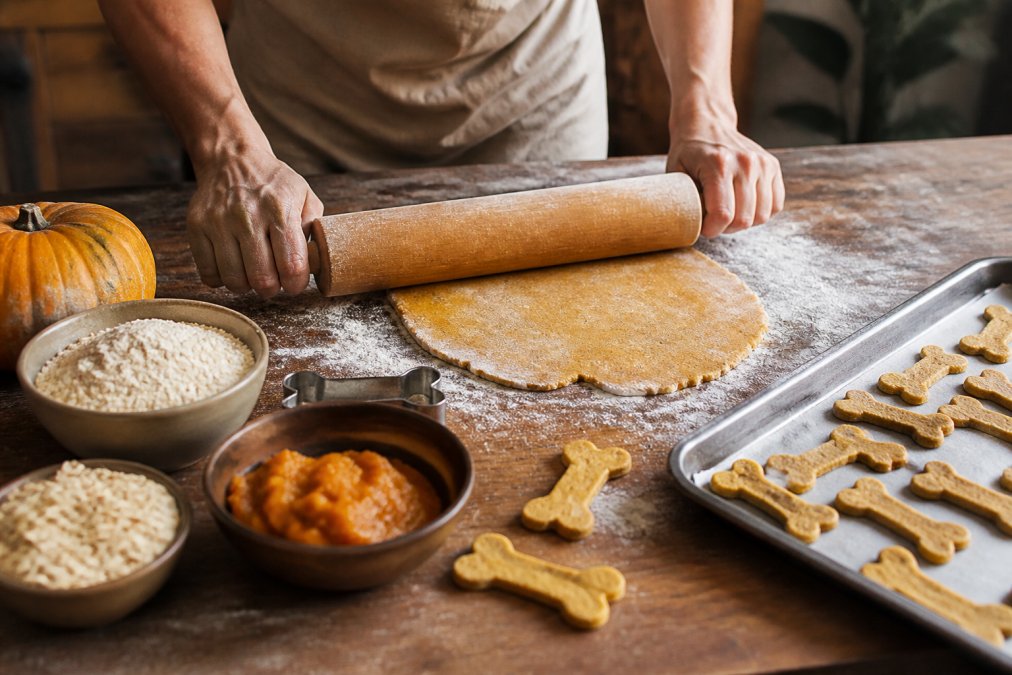
Close-up of a baker's hands rolling fresh dog treats on a floured wooden counter, with organic pumpkin and oat flour in small bowls nearby in warm natural light
You can see it in products like the Organic Pumpkin Mini Muffins for Dogs, handmade with organic pumpkin, oat flour, honey, cinnamon, and fresh ginger. The soft, moist texture suits senior dogs and picky eaters who struggle with hard kibble or brittle treats. Similarly, the Turkey & Pumpkin Jerky uses just two ingredients, lean turkey and organic pumpkin, slow-dehydrated to lock in nutrients without preservatives or added salt.


Quality control looks different at this scale. Makers catch a burnt batch before it ships. They notice when a supplier's pumpkin arrives with a different moisture content and adjust the recipe. These micro-decisions compound into a product that is consistently fresh and safe.
Pet Food Quality Standards: How Small Batches Compare
Pet food quality standards exist on a spectrum. Commercial kibble must meet baseline safety requirements, but those requirements do not address ingredient quality or nutrient retention. A food can be "complete and balanced" on paper while relying heavily on rendered meals and high-temperature extrusion.
Small batch makers operate differently. They often follow human-grade standards, meaning the ingredients are fit for human consumption, not just "feed grade." This distinction matters because feed grade ingredients can include parts of animals that would not pass inspection for human food.
The trade-off is shelf life. Products without preservatives need to be frozen, refrigerated, or consumed quickly. That is not an inconvenience; it is the proof that the food is actually fresh.
Transparent Pet Food Sourcing and Traceability
Transparent pet food sourcing means a maker can tell you where the protein came from and who raised it. Mass-produced food often cycles through commodity channels where the origin is untraceable. Small batch makers tend to build direct relationships with farms and suppliers.
This traceability creates a safety net. When a recall happens in the commercial pet food world, it often spans dozens of brands because they share the same suppliers. A small batch maker's supply chain is narrower, so problems are easier to isolate and correct.
For owners, transparency also builds trust. Knowing that the chicken in your dog's dinner came from a farm practicing humane raising standards changes how you feel about mealtime. It aligns the food in the bowl with your values.
Small Batch vs. Mass-Produced Pet Food: A Comparison
Factor |
Small Batch |
Mass-Produced |
|---|---|---|
Ingredient sourcing |
Direct farm relationships |
Commodity suppliers |
Processing method |
Gently cooked, freeze-dried, or raw |
High-heat extrusion |
Preservatives |
Minimal or none |
Often required for shelf life |
Nutrient retention |
High |
Variable, often supplemented |
Production oversight |
Hands-on, batch-by-batch |
Automated, high volume |
Shelf life |
Shorter |
12-24 months |
Traceability |
High |
Low |
The table captures the practical differences. Mass-produced food wins on convenience and price per pound. Small batch wins on ingredient integrity, freshness, and metabolic health. For many owners, the choice comes down to what they prioritize: cabinet simplicity or bowl quality.
How to Transition Your Pet to a Small Batch Diet
Switching from a shelf-stable kibble to a fresh, small batch diet is a significant change for your pet's digestive system. Kibble is highly processed and often contains starches and fillers that alter the gut environment. A sudden switch can lead to digestive upset, including vomiting, diarrhea, or a refusal to eat. The goal is a slow, steady introduction that allows your pet's digestive enzymes and gut microbiome to adapt.
The 10-Day Transition Schedule
A gradual transition over 7 to 10 days is the safest approach (avma.org). Here’s a practical schedule that works for most pets:
- Days 1-3: Mix 25% new food with 75% old food.
- Days 4-6: Move to a 50/50 ratio.
- Days 7-9: Serve 75% new food with 25% old food.
- Day 10: Offer 100% small batch food.
:::tip Keep the transition period flexible. If your pet's stool becomes loose, hold at the current ratio for a few extra days before increasing the amount of new food. There is no prize for finishing the switch in exactly 10 days.
Adjusting Portions for Fresh Food
A critical difference you'll notice is portion size. Fresh, small batch food contains significantly more moisture than dry kibble, which is only about 10% water (the FDA). This means your pet will need a larger volume of fresh food to get the same caloric intake. A good starting point is to feed about 2-3% of your pet's ideal body weight per day, but this is just a guideline (akc.org). You'll need to monitor your pet's weight and body condition closely over the first few weeks and adjust portions accordingly. A food that is more nutrient-dense may require a smaller portion than you expect.
Troubleshooting Common Issues
- Refusal to Eat: Some pets are initially wary of new textures and smells. Try warming the food slightly in a bowl of warm water (not the microwave) to release the aroma. You can also hand-feed a few pieces to build positive associations.
- Loose Stools: This is often a sign that the transition is too fast. Slow down the schedule and consider adding a small amount of plain, canned pumpkin (not pie filling) to help firm up the stool.
- Picky Eaters: For pets that are used to the high-fat, high-salt taste of some commercial foods, a fresh diet might seem bland at first. Be patient. Do not offer treats or table scraps as a substitute, as this can prolong the pickiness.
The Raw vs. Gently Cooked Consideration
If you are moving to a raw diet, the transition requires even more care. Raw food digests differently than cooked food, and mixing them in the same bowl can cause digestive distress. A common pattern is to transition from kibble to a gently cooked or freeze-dried raw food first, and then, if desired, move to a fully raw diet. This two-step approach is often easier on a pet's system than a direct switch from kibble to raw. Always consult with your veterinarian, especially if your pet has a history of pancreatitis or other digestive conditions, before introducing a raw diet.
Monitoring your pet's energy, coat condition, and stool quality throughout the process will give you the best feedback. The effort you put into a careful transition is an investment in their long-term health and ensures they can fully benefit from the higher quality ingredients in their new food.
Is Small Batch Worth the Cost? A Long-Term View
The upfront price of small batch pet food is undeniably higher than a bag of mass-produced kibble. However, framing this as a simple price-per-pound comparison misses the point. The more accurate lens is a cost-per-serving analysis that factors in nutrient density and the potential for long-term health savings.
The Preventative Healthcare Argument
Think of the price premium as an investment in preventative healthcare. A diet rich in whole-food ingredients and free from artificial additives can support a healthier immune system, better dental health, and more stable energy levels. Over time, these factors can contribute to fewer visits to the vet for chronic issues like skin allergies, obesity, and digestive problems. While no food can guarantee a pet will never get sick, the quality of nutrition plays a foundational role in overall resilience.
The True Cost of Fillers
Mass-produced kibble often relies on inexpensive fillers like corn, wheat, and soy to add bulk. These ingredients provide calories but offer minimal nutritional value. Because your pet's body cannot efficiently absorb these fillers, they pass through the system, resulting in larger, more frequent stools. In contrast, small batch food is typically more digestible, meaning your pet's body extracts more nutrients from each bite. This often translates to smaller, firmer stools and a need for less food overall. When you calculate the cost per serving based on the actual amount of food your pet needs to thrive, the gap narrows considerably.
A Simple Framework for Evaluation
To make an informed decision, consider tracking these factors over a 60-90 day trial period:
- Food Intake: Measure the exact amount of food you are feeding each day. You may find you are feeding less of the small batch food.
- Stool Quality: Note the frequency, size, and consistency. A reduction in stool volume is a strong indicator of better digestibility.
- Energy Levels: Observe your pet's activity and playfulness. Are they more energetic and engaged?
- Coat and Skin: Look for improvements in coat shine, reduced itching, and healthier skin.
- Appetite: Is your pet more enthusiastic about mealtimes, or are they leaving food in the bowl?
By tracking these metrics, you can move beyond the sticker price and evaluate the true value of the food based on your pet's individual response. This approach turns the decision from a simple cost comparison into a holistic assessment of your pet's well-being.
Ultimately, the decision is a personal one. But by understanding the economics of nutrient density and the potential for preventative health benefits, you can make a choice that aligns with both your budget and your commitment to your pet's long-term health.
Frequently Asked Questions
What does 'small batch' actually mean in the pet industry?
Small batch means products are made in limited quantities at a time, rather than on a continuous industrial line. For pet food and treats, this allows makers to control ingredient quality, inspect each batch, and maintain freshness. It also means recipes are often simpler, with whole food ingredients you can recognize. The result is a product that reaches your pet's bowl closer to when it was made, preserving flavor and nutritional value.
Are small batch pet supplies safer than mass-produced alternatives?
Small batch production can offer better traceability and quality control because each run is smaller and easier to monitor. Makers often use humanely raised proteins and organic produce, and they're more likely to test batches for safety. However, 'small batch' alone isn't a safety guarantee. Look for brands that follow pet food quality standards, share their sourcing practices, and are transparent about their processing methods, whether that's gently cooked, freeze-dried, or raw.
Is there a nutritional difference in small batch pet food?
Yes, the nutritional profile can differ. Small batch foods typically use fresh, minimally processed ingredients with higher bioavailability, meaning your pet's body can absorb nutrients more easily. They often skip the synthetic vitamins and fillers found in mass-produced kibble. Because ingredients are fresher and less degraded by heat, you may notice better digestion, firmer stools, and improved energy in your pet, though individual results vary.
How do I know if a small batch pet brand has quality sourcing?
Look for transparent pet food sourcing. Reputable small batch makers will tell you exactly where their proteins and produce come from, whether that's a named farm or a specific region. They should answer questions about their suppliers, processing methods, and quality control. Check for humanely raised or single-source protein claims and organic produce certifications. If a brand can't explain its supply chain clearly, that's a red flag.
Choosing better food for your pet should not feel overwhelming. Click Seattle Local connects you with independent makers across the country who craft small batch treats and supplies with human-grade ingredients and real oversight. Explore our pet collections to find handmade options your pet will love, and shop with the confidence that every purchase supports a real small business.